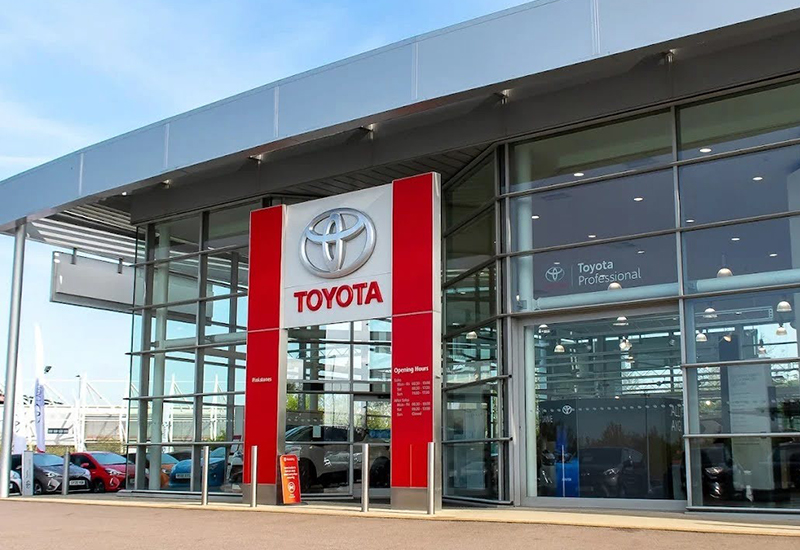
Automotive retail looks different in every market.
In some regions, retailers are managing EV adoption, new entrant brands and customer education. In others, affordability, finance sensitivity and used vehicle supply are shaping customer behaviour. Some customers want digital-first journeys, while others still value the reassurance of a showroom, a familiar advisor and a proper conversation before making a decision.
The details vary by market but the commercial challenge is much more familiar.
Across automotive retail, opportunities are often missed because teams are busy, systems are fragmented and customer follow-up is difficult to manage consistently. A sales enquiry waits too long for a response. A service customer with upgrade potential is not followed up. A finance renewal slips past unnoticed. A lapsed customer remains untouched in the database. A WhatsApp conversation goes cold before anyone has chance to pick it back up.
Not one of these moments looks dramatic on its own. Across a retailer, group or regional network, however, they can have a direct impact on margin, retention and customer experience.
This is where AI is becoming increasingly practical for automotive retailers. The most useful role for AI is not to replace people or add another disconnected system into the mix. It is to help retailers identify, prioritise and act on more of the opportunities already sitting inside their customer data.
Here are four ways AI can help automotive retailers reduce missed opportunities and protect margin.
1. Respond to customer enquiries faster
Response speed matters. When a customer makes an enquiry, the clock starts immediately. If the response is slow, the customer may move on, contact another retailer or simply lose momentum.
That is especially important outside normal trading hours, when retail teams may not be available to respond manually. AI can help by acknowledging the customer quickly, asking relevant questions, gathering useful information and keeping the conversation warm until the right person can take over.
This does not remove the human from the process. It gives the team a better starting point.
Instead of beginning with a cold enquiry hours later, the retailer can pick up a live conversation with more context, clearer intent and a customer who has already been engaged. For sales teams, that can mean fewer missed leads. For customers, it means a faster, more joined-up experience.
2. Identify aftersales customers with upgrade potential
Aftersales is one of the biggest areas of opportunity for retailers. Service customers often represent valuable sales potential but only if the business can identify the right customer at the right moment and follow up with the right message.
That is difficult to manage manually at scale. A customer may be due a service, approaching an important ownership milestone or driving a vehicle that fits a current stock or sales opportunity. The information may already exist in the DMS or CRM but it can be hard for busy teams to spot and act on consistently.
AI can analyse customer and vehicle data to help identify where those opportunities exist. It can then support relevant communication around service, renewal, upgrade or retention opportunities, helping retailers make better use of the data they already hold.
The result is not just more activity. It is more timely activity.
That’s important because customers are much more likely to respond when the message feels relevant to their situation, rather than like a generic campaign sent to a broad list.
3. Improve retention follow-up
Retention is rarely lost in one dramatic moment. More often, it slips away quietly.
A customer becomes overdue for service. A finance agreement approaches its end date. A previous buyer has not heard from the retailer for months. A lapsed customer remains in the database but no one has the time to work the opportunity properly.
AI can help retailers manage these moments more consistently. By analysing existing DMS and customer data, AI can identify customers who may need attention and trigger relevant outreach across sales, service and renewal journeys.
That might include service reminders, MOT reminders, finance renewal prompts, lapsed customer follow-up or service-to-sales opportunities. For retailer teams, this helps reduce the risk of valuable customers disappearing simply because the business was too busy to contact them at the right time.
For customers, it can create a more helpful experience too. A well-timed reminder or relevant message can feel like good service rather than sales activity. The key is timing, context and usefulness.
4. Make customer data more useful
Customer communication is only as strong as the data behind it.
If records are incomplete, duplicated or out of date, even the best campaign will struggle. Messages may go to the wrong person, the wrong vehicle may be referenced or a customer may receive communication that no longer fits their circumstances.
That damages performance and customer trust. It also creates unnecessary work for retail teams.
AI can support data quality by helping retailers identify and improve customer records, making it easier to segment audiences, trigger relevant communication and act on live opportunities.
Cleaner data helps every part of the customer journey. Sales teams get better leads. Aftersales teams get more accurate reminders and follow-ups. Marketing teams get more reliable audiences. Customers get communication that feels more relevant and less disjointed.
In a market where retailers are already investing heavily in systems, this is an important point. The issue is often not whether the business has enough technology. It is whether the data inside those systems can be trusted, used and acted on.
Why local market knowledge still matters
AI should not flatten the differences between markets. A customer in Dubai, Dublin, Durban or Derby will not behave in exactly the same way. Market maturity, brand perception, regulation, digital adoption and customer expectations all vary.
That is why the strongest deployments combine automation with local expertise.
Retailers still need to understand their market, their customers, their stock profile and their commercial priorities. AI simply helps give that knowledge more reach, structure and consistency. It helps teams act on more of what they already know.
That is the real opportunity. AI is not there to make automotive retail less human. Used well, it helps protect the human relationship by making sure important customer moments are not dropped, delayed or buried in admin.
Turning missed moments into managed opportunities
Automotive retail will continue to move at different speeds in different markets.
EV adoption will not follow one smooth curve. New brands will keep changing customer consideration. Affordability pressures will continue to influence buying behaviour. Customers will keep expecting faster, clearer and more convenient communication.
Ultimately, the retailers that perform best will have something in common. They will respond faster, follow up more consistently, use their data more intelligently and protect more margin from the small missed moments that used to be accepted as part of the job.
The market may be local but the missed opportunities are universal. The retailers that close them first will give themselves a valuable head start.
Ready to reduce missed opportunities?
If you would like to see where AI could help your team improve follow-up, activate customer data and protect margin, the AI Assistant team can help. Get in touch at [email protected] or call +44 (0) 1488 757447.